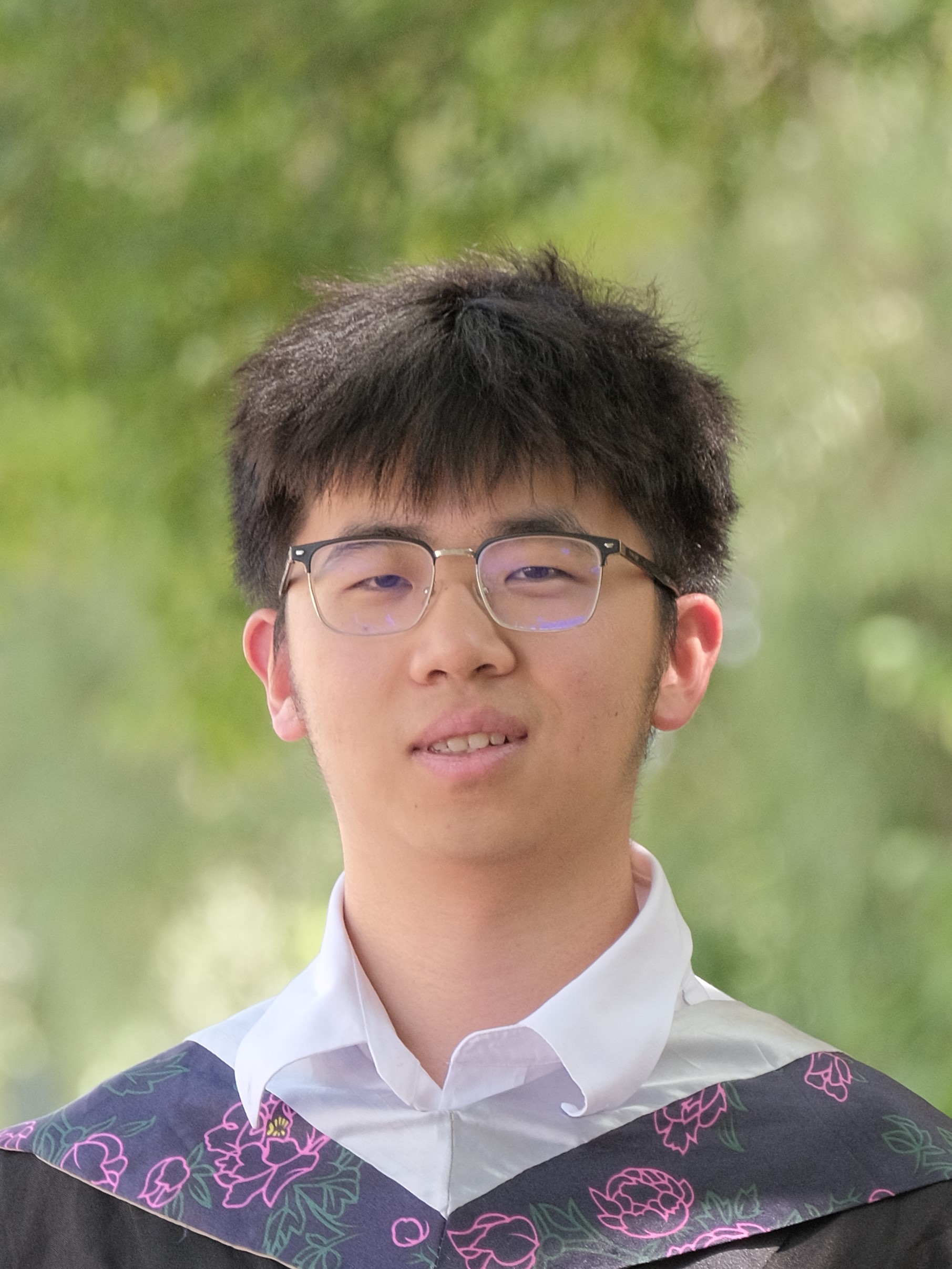
Hi! I’m Ziyang Xu (徐子扬, StatXzy7), a Ph.D. student in Mathematics at the Department of Mathematics, The Chinese University of Hong Kong (CUHK) from August 2024, advised by Prof. Tieyong Zeng and Liu Liu.
My recent research interests include reinforcement learning for LLMs, on-policy distillation, and image processing. I mainly work with PyTorch, Transformers, LoRA/SFT, distributed training, and on-device AI deployment.
You can find my CV here: Ziyang Xu’s Curriculum Vitae.
Feel free to reach out at zyxu@math.cuhk.edu.hk or ziyangxu0205@gmail.com if you want to chat or collaborate!
🔥 News
- 2026.08: 🔥🔥🔥 Paper Deep Learning for Precision Grading of Schistosoma Japonicum-induced Liver Fibrosis in Ultrasound Images is published online in Nature Communications!
- 2025.08: 🔥🔥🔥 Paper REACT: Representation Extraction And Controllable Tuning to Overcome Overfitting in LLM Knowledge Editing accepted to The 2025 Conference on Empirical Methods in Natural Language Processing (EMNLP 2025)!
-
2024.03: 🔥🔥 Paper PTransIPs: Identification of phosphorylation sites enhanced by protein PLM embeddings accepted to IEEE J-BHI! A collaborative work with Haitian Zhong and Tianchi Lu (卢天驰).
- 2022.12: 🎖️ Won National Scholarship(2021-2022). My 2nd National Scholarship.
- 2021.12: 🎖️ Won National Scholarship(2020-2021). My 1st honor during undergraduate study in LZU.
📖 Educations
- 2024.08 - 2028.07(Expected) The Chinese University of Hong Kong, Ph.D. in Mathematics, Hong Kong SAR, China (Supervisor: Tieyong Zeng, Liu Liu)
- 2020.09 - 2024.06 Lanzhou University, B.S. in Statistics, Lanzhou, China (GPA: 92.69/100, Ranking: 1/52; Supervisor: Zhouping Li, XingXing Jia)
- 2017.09 - 2020.07 High School Affiliated To Nanjing Normal University, Nanjing, China
📝 Publications
🧬 AI for Science
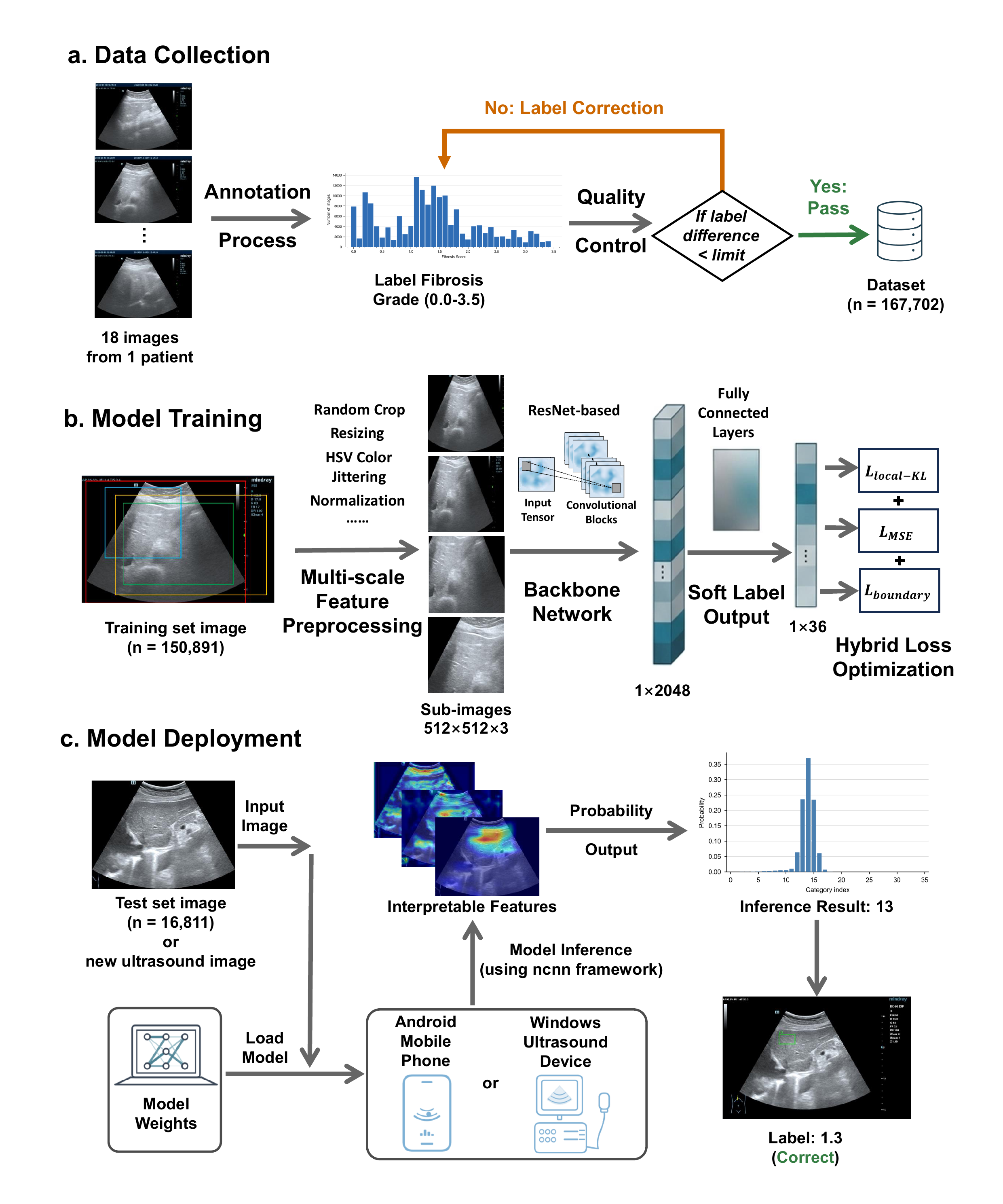
Deep Learning for Precision Grading of Schistosoma Japonicum-induced Liver Fibrosis in Ultrasound Images
Ziyang Xu, Jianfeng Zhang, Tingting Wu, Haiyong Hua, Kun Yang, Tieyong Zeng
- Status: Published online in Nature Communications (link), August 2026.
- Work: We developed SFibAI, an end-to-end deep learning framework for fine-grained fibrosis grading from B-mode ultrasound, trained on a large-scale multi-center dataset of 167,702 images with 36 discrete fibrosis stages.
- Performance: Designed a hybrid KL/MSE/boundary-sensitive loss, achieving 93.9% accuracy within ±0.5 stages and MAE 0.116 on 16,811 independent test images.
- Deployment: Built a Windows/Android SDK with average per-image latency below 400 ms.
- Codes:

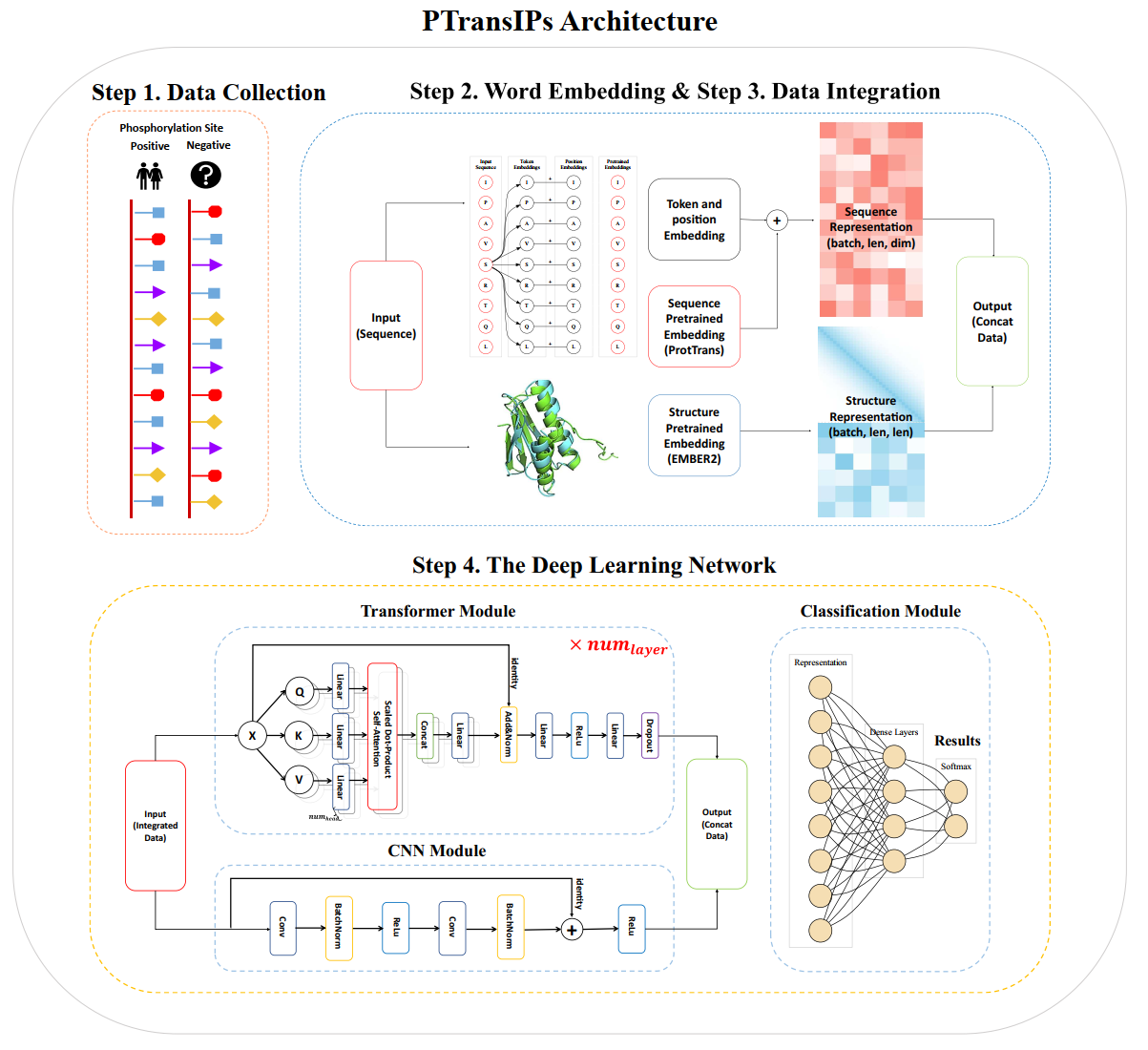
PTransIPs: Identification of phosphorylation sites enhanced by protein PLM embeddings
Ziyang Xu†, Haitian Zhong†, Bingrui He, Xueying Wang, Tianchi Lu
- Work: We present PTransIPs, a new deep learning framework for the identification of phosphorylation sites in host cells infected with SARS-CoV-2. It utilizes protein pre-trained language model (PLM) embeddings and transformer structure to make the final prediction, with transductive information maximization (TIM) loss to better evaluate the error. PTransIPs is also a universal framework for all peptide bioactivity tasks.
- Performance: After comparing PTransIPs with five existing phosphorylation site prediction tools, we notice it achieves the best performance in all five model evaluation metrics (ACC, SEN, SPEC, MCC, AUC) for both S/T and Y sites.
- Impact: We hope that PTransIPs will aid in deepening the understanding of SARS-CoV-2 phosphorylation sites and look forward to enhancing PTransIPs in the future to become a more powerful tool for the scientific community.
- Codes:

💻 Large Language Models
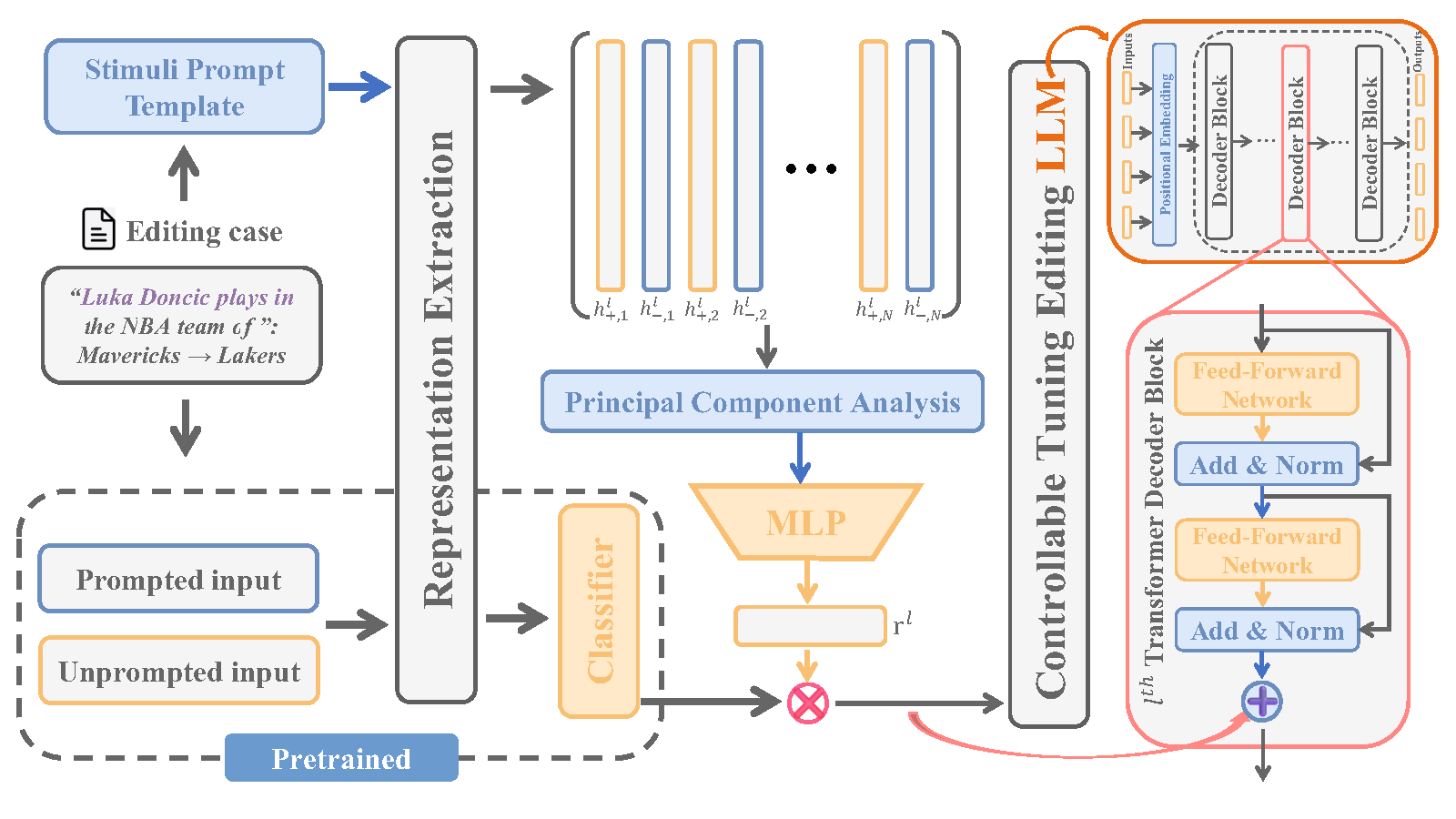
REACT: Representation Extraction And Controllable Tuning to Overcome Overfitting in LLM Knowledge Editing
Haitian Zhong, Yuhuan Liu, Ziyang Xu, Guofan Liu, Qiang Liu, Shu Wu, Zhe Zhao, Liang Wang, Tieniu Tan
- Abstract: Large language model editing methods frequently suffer from overfitting, wherein factual updates can propagate beyond their intended scope, overemphasizing the edited target even when it’s contextually inappropriate. To address this challenge, we introduce REACT (Representation Extraction And Controllable Tuning), a unified two-phase framework designed for precise and controllable knowledge editing. In the initial phase, we utilize tailored stimuli to extract latent factual representations and apply Principal Component Analysis with a simple learnable linear transformation to compute a directional “belief shift” vector for each instance. In the second phase, we apply controllable perturbations to hidden states using the obtained vector with a magnitude scalar, gated by a pre-trained classifier that permits edits only when contextually necessary. Relevant experiments on EVOKE benchmarks demonstrate that REACT significantly reduces overfitting across nearly all evaluation metrics, and experiments on COUNTERFACT and MQuAKE show that our method preserves balanced basic editing performance (reliability, locality, and generality) under diverse editing scenarios.
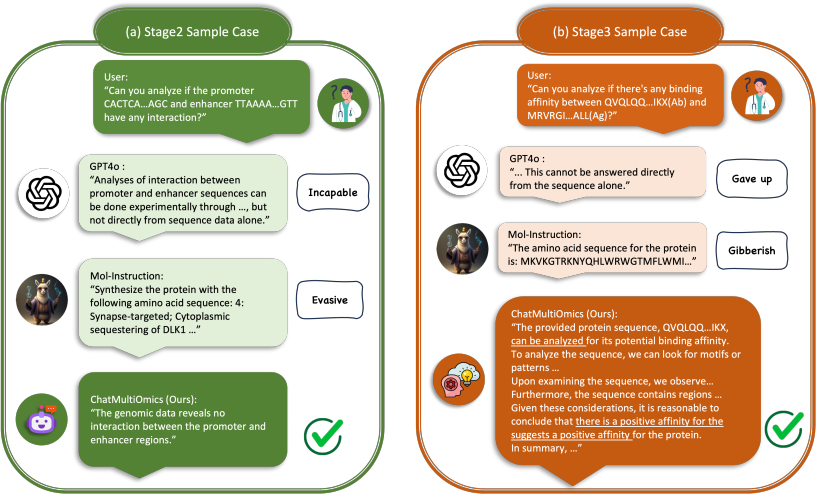
Biology-Instructions: A Dataset and Benchmark for Multi-Omics Sequence Understanding Capability of Large Language Models
Haonan He†, Yuchen Ren†, Yining Tang†, Ziyang Xu†, Junxian Li, Minghao Yang, Di Zhang, Dong Yuan, Tao Chen, Shufei Zhang, Yuqiang Li, Nanqing Dong, Wanli Ouyang, Dongzhan Zhou, Peng Ye
- Abstract: Large language models (LLMs) have shown remarkable capabilities in general domains, but their application to multi-omics biology remains underexplored. To address this gap, we introduce Biology-Instructions, the first large-scale instruction-tuning dataset for multi-omics biological sequences, including DNA, RNA, proteins, and multi-molecules. This dataset bridges LLMs and complex biological sequence-related tasks, enhancing their versatility and reasoning while maintaining conversational fluency. We also highlight significant limitations of current state-of-the-art LLMs on multi-omics tasks without specialized training. To overcome this, we propose ChatMultiOmics, a strong baseline with a novel three-stage training pipeline, demonstrating superior biological understanding through Biology-Instructions. Both resources are publicly available, paving the way for better integration of LLMs in multi-omics analysis. The Biology-Instructions is publicly available at: https://github.com/hhnqqq/Biology-Instructions.
- Codes:

💻 Short Visiting / Intern
- 2024.10 - 2025.10 Huawei Hong Kong Research Institute, Theory Lab, Research Intern, Hong Kong SAR, China. Project: Mathematical-Model-Based Image Algorithm Research (PI: Tieyong Zeng).
- Developed an image restoration pipeline for information-missing artifacts caused by short-exposure sampling of screen refresh cycles in mobile photography, combining Sa2VA-8B language-guided screen/person segmentation, luminance-jump maps for banding-region detection, structure-aware mask refinement, and long-short exposure frame registration and fusion.
- 2024.07 - 2024.08 Peking University, BICMR, AI for Mathematics Formalization and Theorem Proving Seminar, Beijing, China
- 2023.01 - 2023.10 Western University, The Schulich School of Medicine & Dentistry, Mitacs Globalink Research Intern, London, Canada. Project: Deep Learning for Integrating Multimodal Data for Precision Medicine (Supervisor: Pingzhao Hu).
🎖️ Honors and Awards
- 2024.06 Brilliant Graduate of Lanzhou University - Academic Type 2024 (出彩毕业生-学术深造型) (Top 5 from university) News
- 2024.03 CUHK Vice-Chancellor’s PhD Scholarship
- 2024.03 Outstanding Graduate of Gansu Province(甘肃省优秀毕业生) News
- 2023.05 Chun-Tsung Scholar(䇹政学者), (The 25th Annual) Figure News
- 2023.04 Mitacs Globalink Research Intern Scholarship, (2023) Figure News
- 2022.12 National Scholarship(国家奖学金), (Rank 1/117) Figure News
- 2022.06 Merit Student of Gansu Province(甘肃省三好学生, 0.6%) Figure News
- 2021.12 National Scholarship(国家奖学金), (Rank 1/157) Figure News
🎓 Teaching
- 2025-26 Term 2 Teaching Assistant, MMAT5310 - Financial Analytics, The Chinese University of Hong Kong
- 2025-26 Term 1 Teaching Assistant, MMAT5330 - Econometric Principles and Data Analysis, The Chinese University of Hong Kong
- 2024-25 Term 2 Teaching Assistant, MATH3340 - Mathematics of Machine Learning, The Chinese University of Hong Kong
- 2024-25 Term 1 Teaching Assistant, MATH3320 - Foundation of Data Analytics (2024/25), The Chinese University of Hong Kong